
Bishop Don Magic Juan Storytelling and the Oral Tradition

Most people who study hip-hop culture focus on the music. They track the beats, the producers, the record labels. What they miss is the Bishop Don Magic Juan storytelling tradition that quietly shaped the way street knowledge moves from one generation to the next. Born Donald Campbell on November 30, 1950, on Chicago's West Side, Bishop Don Magic Juan turned lived experience into a vehicle for transmission. His words were never just words. They were coded, layered instruction passed mouth to ear, the same way communities have always kept their real knowledge alive.
Table of Contents
Quick Takeaways
Key Insight
Explanation
Oral tradition is the original street media
Before any platform existed, the street corner was where philosophy, warnings, and wisdom were passed down. Bishop Don Magic Juan operated squarely in that lineage.
His name itself tells a story
Every part of "Bishop Don Magic Juan" was earned through experience. The Bishop title came from the church. "Magic" was given by a mentor on the street. "Don Juan" came from the women who recognized his presence. The name is a biographical oral record.
Players Ball is storytelling infrastructure
The annual Players Ball he founded in Chicago is not just a party. It is a ceremony that preserves, celebrates, and transmits a specific cultural knowledge through gathered community.
The pivot from pimp to preacher deepened the message
His 1985 spiritual conversion gave him a second chapter. That contrast, street life to pulpit life, became the engine of his storytelling. It gave him credibility in both worlds.
Hip-hop gave his words a distribution network
Relationships with artists like Snoop Dogg carried his philosophy into millions of households who would never have heard a street preacher from Chicago's West Side otherwise.
Autobiography as oral tradition in print
His autobiography, "From Pimp Stick to Pulpit," is an oral narrative committed to paper. The voice on the page is the same voice from the block and the pulpit.
Authenticity is the load-bearing wall
Every element of his storytelling works because it is grounded in actual experience. Listeners know the difference between someone who lived it and someone performing it.
The Oral Tradition and Street Culture
The oral tradition is the oldest communication technology humans have. Scholars at Britannica describe it as "a dynamic and highly diverse oral-aural medium for evolving, storing, and transmitting knowledge, art, and ideas." That description sounds academic. The reality on a Chicago street corner in the 1970s is not academic at all.
On the West Side of Chicago, information about how to survive, who to trust, and how the world actually operated did not come from books. It came from people who had been through it. Elders, players, preachers, and survivors passed down their understanding through stories, proverbs, and direct address. That is the environment that produced Bishop Don Magic Juan.
In the United States, this tradition runs through multiple channels at once. Scholars have noted that folk preachers use oral tradition to extrapolate stories based on biblical accounts, while hip-hop artists improvise socially coded poetry along familiar rhythmic patterns. Bishop Don Magic Juan is one of the rare figures who occupied both roles simultaneously, bridging the sacred and the street without contradiction.

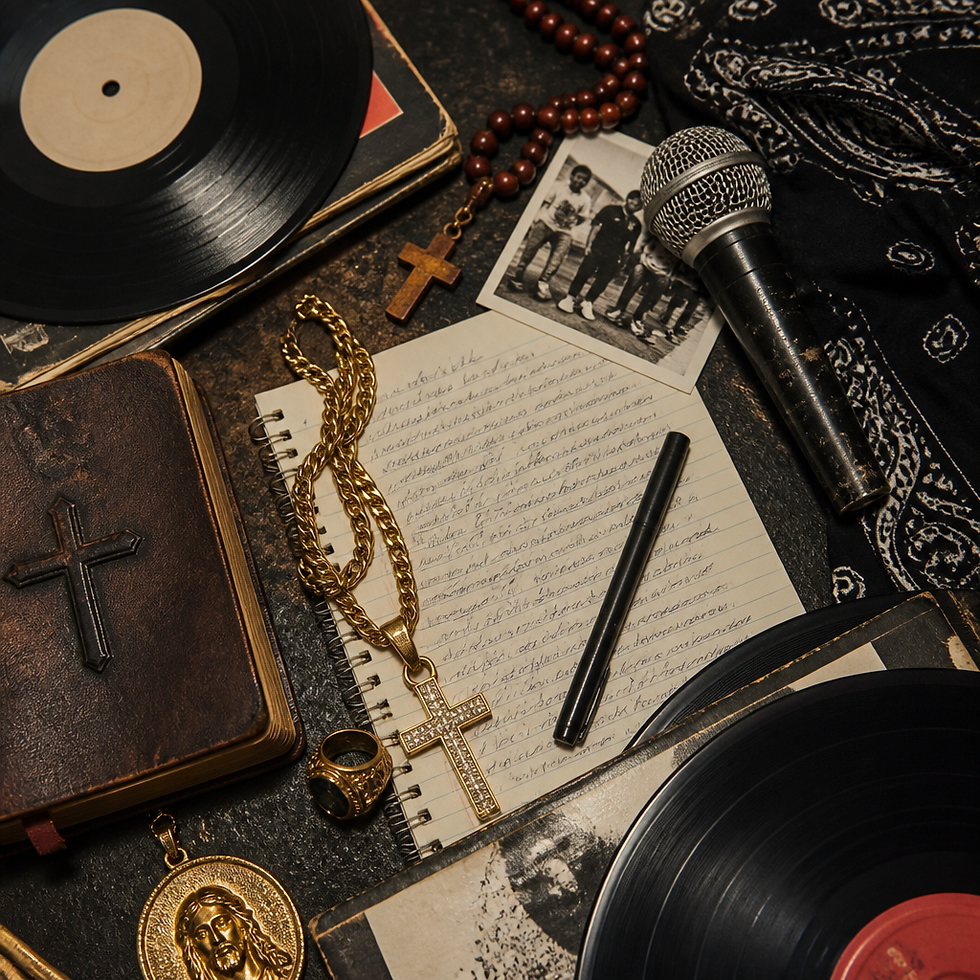
The griot tradition from West Africa, which preserved community history through spoken word, music, and performance, traveled through the African diaspora into the Caribbean toasting tradition, and eventually into the block parties of 1970s New York where hip-hop was born. Bishop Don Magic Juan did not invent this chain. He is a powerful link in it.
Pro tip: When you study the Bishop's interviews and talks, listen for the structural moves he makes: the call and response rhythm, the repetition of key phrases, the pivot from story to lesson. These are oral tradition techniques that have been refined over centuries, not personal quirks.
From the Streets of Chicago to the Pulpit
Donald Campbell grew up in Austin, a neighborhood on Chicago's West Side. He entered the street life early, eventually becoming one of the most recognized figures in Chicago pimp culture. He won the "Pimp of the Year" distinction at the Players Ball for 13 consecutive years. That is not a footnote. That is 13 years of being the most persuasive, most visible, most respected figure in a room full of people who valued exactly those qualities.
In 1985, by his own account, a spiritual experience while under the influence of PCP led him to leave the game and enter the church. He enrolled at the Moody Bible Institute night school, studying under Leonard Rascher, who later came weekly to lead Bible study after Campbell opened his own storefront church, the Magic World Christian Kingdom Church of the Royal Family, in South Austin. Rascher reportedly paid the rent for the church out of his own pocket. That detail matters because it shows the Bishop's ability to build genuine loyalty, a skill that runs through every phase of his life.
He published his autobiography, "From Pimp Stick to Pulpit: The Life Story of Don 'Magic' Juan," cowritten with his sister Ann Bromfield. The title is not just marketing. It is the complete arc of his oral tradition: from the language of the street to the language of the spirit, and the argument that both carry real wisdom.
Why the Conversion Amplified the Storytelling
A story without conflict is not a story. The Bishop's life is all conflict, and he never pretended otherwise. His conversion did not erase his street history. It reframed it. Every story he tells about the game is now also a story about consequence, about transformation, about the gap between what he was and what he became.
That dual perspective is exactly what makes oral tradition powerful. The most effective storytellers in any community are the ones who have been on both sides of a door. The Bishop has been on both sides of more doors than most people know exist.
How Bishop Don Magic Juan Built His Voice
His name itself is a layered oral document. In an interview with AllHipHop, he explained the origin of each piece. "Don" came from women who recognized his player energy in his teenage years. "Magic" was given to him by a mentor known as the Pimpgod, who said he was "bringing magic to the game" while others fell off. "Bishop" arrived when he entered the church in 1985. The title "Arch" was bestowed by Rudy Ray Moore, the legendary Dolemite, who called him the Arch Bishop, saying "that's the highest bishop there can be."
Each name layer was granted by someone else, which is a defining feature of oral tradition culture. You do not name yourself. The community names you based on what you have demonstrated. The accumulation of those names is a spoken biography that anyone in the culture can read on contact.
The Role of Ceremony in Preserving Street Knowledge
The Players Ball, which Bishop Don Magic Juan founded in Chicago, is often misread as pure spectacle. It is also ceremony. Anthropologically, ceremonies are the containers oral cultures use to hold and repeat important knowledge. They bring the community together, establish hierarchy through visible display, recognize achievement, and create shared memory. Every element of the Players Ball serves those functions.
The 43rd annual Players Ball was held on December 2, 2017, on the West Side of Chicago, returning to the city after a long hiatus. That return after years away is itself a statement about the durability of oral tradition. You cannot kill a story that people are still telling.

Pro tip: If you want to understand how street storytelling actually transmits philosophy, do not just watch what the Bishop says. Watch what the room does. Oral tradition is always a two-way exchange. The audience's reaction is part of the text.
Street Wisdom as a Living Philosophy
The phrase "street wisdom" gets used lazily. People apply it to any colorful saying from someone with a hard background. What the Bishop practices is not casual. It is a structured philosophical system developed over decades, tested against real consequences, and communicated through specific rhetorical techniques.
His philosophy, which he calls the "Church of the Game," merges the ethics of the street code with Christian spirituality. The game, in his framing, is not a synonym for exploitation. It is the set of rules by which you conduct yourself with discipline, loyalty, and respect. The church gives those rules a moral framework. Neither cancels the other out.
What Separates Street Wisdom from Street Noise
Street noise is what the young and reckless say. Street wisdom is what survives. The test is simple: does the knowledge still hold up ten years later? Does it apply across different situations? Does the person delivering it carry the marks of having actually lived it?
The Bishop passes all three tests. His official site describes content that includes "raw and emotional" interviews where he "shares real stories of pain, lessons, and faith that shaped his journey from the streets to wisdom." That framing is not accidental. Pain, lessons, faith, and journey are the four pillars of oral tradition structure across every culture that has ever used it.
The most powerful stories are not the ones about winning. They are the ones about what winning cost, and whether it was worth it. That tension is where the real instruction lives.
Hip-Hop Preaching Style and Its Roots
The relationship between hip-hop and preaching is direct and documented. Both forms draw from the same African American oral tradition. Both use rhythm, repetition, call and response, and narrative arc to move an audience. Both require the speaker to project authority while also claiming shared experience with the listener.
Bishop Don Magic Juan became a spiritual advisor to a documented roster of hip-hop figures including Snoop Dogg, as well as personalities like Mike Tyson and Mariah Carey. His reach across those very different worlds is not a coincidence. It reflects the universality of the oral tradition skills he carries. A man who can hold a room in a Chicago street setting and also hold a room in a recording studio is working with tools that transcend any single environment.
How the Hip-Hop Connection Extended His Oral Reach
Before the internet, oral tradition was limited by geography. The Bishop's words could reach Chicago, could reach anyone who attended the Players Ball, could reach anyone who bought his book. The hip-hop connection broke that geography open. Snoop Dogg's cultural footprint spans continents. When the Bishop's philosophy travels inside that network, it moves the way oral tradition always moved in pre-modern societies: through figures of cultural authority who carry it forward.
His official catalog at bishopdonmagicjuan.com describes content spanning "exclusive videos, interviews, sermons, and media celebrating his life, legacy, and the philosophy of 'Church of the Game'" with influence that "spans across generations and genres." The catalog that Hood Box Office and the wider streaming ecosystem now distributes is, in one sense, oral tradition finding its digital infrastructure. The content is the same. The delivery mechanism is new.
The platform at Hood Box Office exists precisely because this kind of content, uncut street interviews, documentaries on pimp culture, raw conversations between legendary figures, requires a home that understands its value. Viewers looking for authentic content rooted in the oral tradition of street culture will find it there in a way that sanitized mainstream platforms cannot provide.
Comparing Street Storytelling Approaches
Not all street storytelling carries the same weight. The Bishop's approach can be usefully compared to other modes that hip-hop culture has used to transmit street knowledge.
Approach
Primary Method
Strengths and Limitations
Bishop Don Magic Juan's oral testimony
Direct personal narrative, ceremonial context (Players Ball), spiritual framing, mentor-to-student transmission
Maximum authenticity and authority. Requires physical presence or high-quality recorded documentation to travel. Works across generations because the message is grounded in universal experience.
Hip-hop lyrical storytelling
Rhyme and rhythm over instrumental production, often studio-recorded and widely distributed
Massive reach through commercial channels. Can be diluted by label pressure, trend-chasing, or the gap between the artist's real experience and what sells. Best examples (Scarface, Ice Cube, Jay-Z's early catalog) function as oral tradition. Worst examples are costumes.
Street documentary interview format
Unscripted interviews with figures who lived the story, minimal production interference, raw footage style
Closest to the original oral tradition model when done right. Allows the subject to control the narrative. Requires a platform that will not sanitize the content before distribution. This is the format that Hood Box Office was built to preserve and distribute.
The comparison above shows that the format closest to authentic oral tradition is the one most likely to be rejected by mainstream gatekeepers. That is not a coincidence. Raw, unedited street testimony carries information that comfort-seeking audiences and risk-averse advertisers would rather not hear. This is exactly why platforms willing to carry it without interference matter.
Frequently Asked Questions
What is Bishop Don Magic Juan's connection to the oral tradition?
Bishop Don Magic Juan operates directly within the African American oral tradition, a lineage that runs from West African griots through the Black church, through the street philosopher culture of 20th-century urban America, and into hip-hop. He transmits knowledge through personal testimony, ceremony, mentorship, and direct address rather than through text-based institutions. His career, from street figure to preacher to hip-hop cultural icon, follows the classic oral tradition pattern of the elder who has seen multiple worlds and uses that experience as the source of their authority.
How did hip-hop help spread Bishop Don Magic Juan's message?
His relationships with major hip-hop figures, documented in multiple sources, extended his philosophical reach far beyond Chicago. When he became a spiritual advisor to artists with global audiences, his "Church of the Game" philosophy traveled inside their cultural networks. The hip-hop connection gave his oral tradition the distribution infrastructure it needed to reach a generation that would never have encountered it through traditional religious or community channels.
What is the "Church of the Game" philosophy?
The "Church of the Game" is Bishop Don Magic Juan's personal philosophical framework, which fuses the ethics of the street code with Christian spiritual values. In this framing, "the game" refers to the discipline, loyalty, and respect required to conduct oneself with integrity in any environment. The church provides the moral foundation for those ethics. The philosophy argues that street wisdom and spiritual wisdom are not opposites. They are complementary systems of knowledge about how to live with purpose and accountability.
Why does the street storytelling tradition matter for hip-hop culture today?
Hip-hop was born from oral tradition and it still depends on it for authenticity. The lyrical and cultural elements that have real staying power, the ones that hold up over decades, are the ones rooted in lived experience transmitted person to person before they ever hit a studio. As commercial pressure pushes hip-hop toward performance and spectacle, the oral tradition that figures like Bishop Don Magic Juan represent becomes more important, not less. It is the baseline against which authenticity is measured.
How is the Players Ball connected to oral tradition?
The Players Ball functions as a ceremony, and ceremonies are how oral cultures preserve and repeat important knowledge. By gathering the community, establishing visible hierarchy, recognizing achievement, and creating shared memory, the Players Ball does exactly what oral tradition ceremonies have always done. Bishop Don Magic Juan founded it in Chicago, and even after years of absence from the city, it returned. That durability is characteristic of genuine oral tradition: the knowledge outlives any single performance of it.
Where can you find authentic Bishop Don Magic Juan storytelling content?
The official site at bishopdonmagicjuan.com hosts exclusive interviews, sermons, and documentary content. For viewers who want the full uncut experience, Hood Box Office offers the kind of raw, unfiltered street documentary and interview content that captures the oral tradition format at its most honest. This includes conversations between legendary street figures, unscripted exchanges about loyalty and the rules of the game, and documentation of a world that mainstream platforms routinely sanitize out of existence.
If you have encountered Bishop Don Magic Juan's storytelling and it hit different from anything you heard on a mainstream platform, share what part of his message stayed with you in the comments below.
References
Wikipedia biography of Don "Magic" Juan covering his life, career, and cultural impact
Chicago Reader profile on how Don Magic Juan found God and built his post-street legacy
Britannica overview of oral tradition as a mode of transmitting knowledge, art, and ideas
The Culture Crypt analysis of rap as an art of storytelling rooted in the griot tradition


Comments